
Tesla's First Coast-to-Coast Drive with Zero Human Intervention
This is really great (for me to poop on)

The Tesla fandom is abuzz this week because a Tesla just made the first coast-to-coast trip with zero human interventions. The glory goes to a lidar salesman from Tacoma, Washington.
(Wait, lidar salesman?? The irony is so off the charts that I didn’t believe it either but I investigated and it’s true. Ish. He sells lidar equipment for construction work, unrelated to self-driving cars. He’s now doing an impressive job of milking this for the meme value, like taping one of his gadgets to the roof of his Tesla. He also, as part of his publicity tour in a huge podcast studio, showed off a 3-D model of the venue that he made using the lidar equipment he sells. It’s amazingly rich and full-color and to me just drives home how crazy it is not to take advantage of such wildly superhuman sensing capability.)
So what’s the verdict? Is this cross-country trip a big deal or what? We keep doing this, like when Tesla autonomously delivered their first car, and I keep finding ways to be unimpressed. I mean, my track record is impeccable so far, if I do say so myself: how many autonomous deliveries have happened in the six months since the initial demo? That’s right, zero. [UPDATE placeholder for whenever this happens; still not as of April 2026.]
Fine fine, and how am I going to poop on this this news? Here’s a commenter on ex-Twitter, mocking exactly the kind of things I’m about to say:
But it’s not real autonomy because he couldn’t breakdance on top of his car on the highway!
I do want to be fully fair and balanced about this but before I do, let me just turn that around like so:
(summing over lifetime eye-blink time and knee-based steering) My decades-old Mazda just hit 3000 cumulative fully autonomous miles with no hands touching the steering wheel nor eyes on the road!
I don’t know if that’s more or less unfair than the breakdancing quip but let me lay this out again carefully since very smart people I know still have so many misconceptions.
First of all, it’s hard to overstate how touch-and-go this was. The person who pulled this off live-tweeted the saga and at one point we were treated to this image:
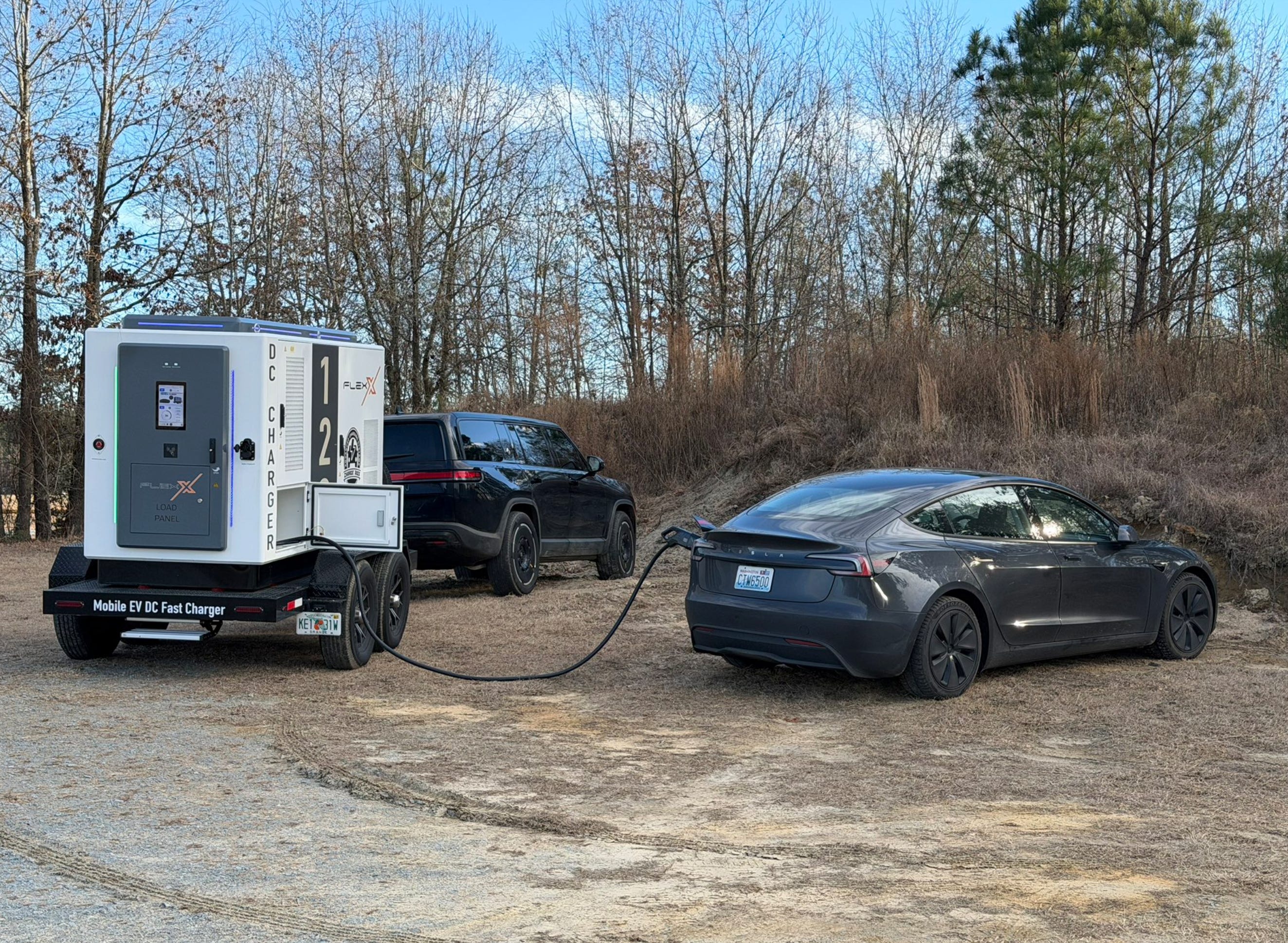
Did the car run out of charge and have to get rescued? No no, towards the end of the trip everyone just got so excited about pulling off the first coast-to-coast zero-intervention road trip that they didn’t want to risk driving anywhere difficult, so someone followed him out to the ass-end of nowhere with a mobile charging station.
But I’m not actually crying foul or begrudging this person aiming for idealized conditions for hitting this milestone. He used normal charging stations most of the time. [EDIT: Also see discussion in the comments about whether it’s a fair characterization to say he was followed with a mobile charging station even this one time.] And I have no doubt that others will follow with no deviations from a human-piloted cross-country road trip. I demand zero rooftop breakdancing.
And of course being able to navigate random patches of unmapped dirt is itself impressive. Tesla has come a long way. As I said last week, I will no longer be shocked if they pull this off this year, now referring to 2026. (I also won’t be shocked to end up vindicated in my original prediction that this just won’t get safe enough to drop the human backups until Musk relents on lidar, which, see again my previous AGI Friday explaining just how wrong Musk is about lidar.)
But back to the quibbling, my next point is about how relatively easy freeway miles like this are. Did you know that a self-driving project called Navlab achieved 98.2% hands-free miles on a cross-country trip in the 1990s?
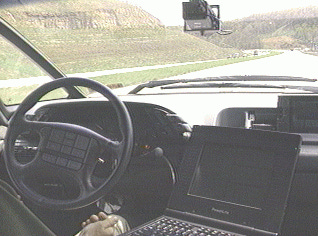
Tesla is obviously lightyears beyond that but, well, those last few 9’s of reliability are just so much harder than they seem. If someone drives coast to coast and never has to disengage the self-driving, that might just be that nothing crazy happened to occur on that journey like a kid running out in the road. 3,000 miles (or the 10,000 continuous miles the road-tripper is now up to) just isn’t that much.
So is Tesla right now closer to that 1990s research project, or closer to Waymo with their 150+ million autonomous miles and counting? If you say “obviously closer to Waymo” I say you’re half right. Tesla is closer to Waymo than Navlab but it isn’t obvious.1
Speaking of Waymo, I just want to clarify this again since it’s such a persistent point of confusion. Waymos are not tele-operated. I suspect that Tesla may have pulled off their (so far) small-scale robotaxi program in Austin by using tele-operators. Is that not fair game, people keep asking, since Waymo does that too? The answer is no, because Waymo does not do that. You’re thinking of the thing they call remote assistance. Level 4 autonomy allows for the car getting confused and autonomously stopping and asking for help, as long as the human is never in control in real time. If a human needs to monitor in real time to keep it safe, that’s “full self-driving (supervised)” as Tesla euphemistically puts it.
Which brings me to my next point to clarify: Why do I keep acting like it doesn’t count if a human is watching? Isn’t the important thing that the human doesn’t have to intervene? What’s wrong with having a human monitor just out of abundance of caution?
The reason I’ve emphasized “ability to disengage” instead of the cleaner “actual disengagements” is just due to insufficient mileage. Fatalities with human drivers happen something like once every 100 million miles. Waymo is well beyond that number with no fatalities so far, and of course zero interventions since humans aren’t in the loop at all. When Tesla gets there we won’t need to quibble about actual vs counterfactual disengagements. The whole question of tele-operators will also be moot at that point. When Tesla scales to millions of cars (especially privately-owned ones) it’ll be safe to assume they’re not using tele-operators, if they ever were.
I promised to be fair and balanced so let me end with two more points, one bearish and one bullish. Elon Musk’s track record is so bad on this that it’s hard to take him seriously. Wikipedia has a nice list of his predictions about self-driving going back 12 years now and he has just been continuously, unrelentingly wrong. The single green square in that table is for the Austin robotaxi launch, and, well, as I mentioned a few weeks ago, Musk admitted in November that, as of then, Tesla had not solved unsupervised autonomy, utterly contrary to everything he had said for the previous year.
All that said, if you try riding in a Tesla with the last version of Full Self-Driving, I believe you’ll be duly impressed. The progress is palpable and eventually it’s going to happen for real, where you can actually read a book in the driver’s seat, and it’s going to be amazing.
UPDATE: If our metric is number of nines of reliability, then by one naive calculation Navlab’s 98.2% is -log(1-0.982) = 1.7 nines of reliability. Waymo with their 1-2 million miles between at-fault accidents is 6-6.3 nines of reliability. Humans are arguably at best at 500k miles between at-fault accidents which is 5.7 nines. (Working with “number of nines” is a little counterintuitive; note that “twice as good” means log(2) = 0.301 more nines.) For Tesla it’s very hard to know but plausibly the robotaxis in Austin go 50k-200k between at-fault accidents, which is around 5 nines. Doing the math, we could say Tesla is 75% of the way from Navlab to Waymo.
"Did the car run out of charge and have to get rescued? No no, everyone just got so excited about pulling off the first coast-to-coast zero-intervention road trip that they didn’t want to risk driving anywhere difficult, so someone followed him out to the ass-end of nowhere with a mobile charging station."
This is a misrepresentation, and it would be interesting to hear what your source is.
The original tweet https://x.com/DavidMoss/status/2006793347613233291 explains that he made a visit to a test track that did not have a charger (probably should have planned that part of the trip better). All in all, he used Tesla's network to charge https://x.com/DavidMoss/status/2006590852655895018
"how crazy it is not to take advantage of such wildly superhuman sensing capability"
Tesla DOES use LiDAR data in testing to benchmark and validate the vision system's performance (e.g., detecting obstacles sooner with less jitter). See this post and video from Karpathy https://x.com/karpathy/status/1407017269083865095
You can find many references to "validation units" on Twitter, as Tesla does testing in multiple cities for Robotaxi https://x.com/SawyerMerritt/status/2003523665363894291